
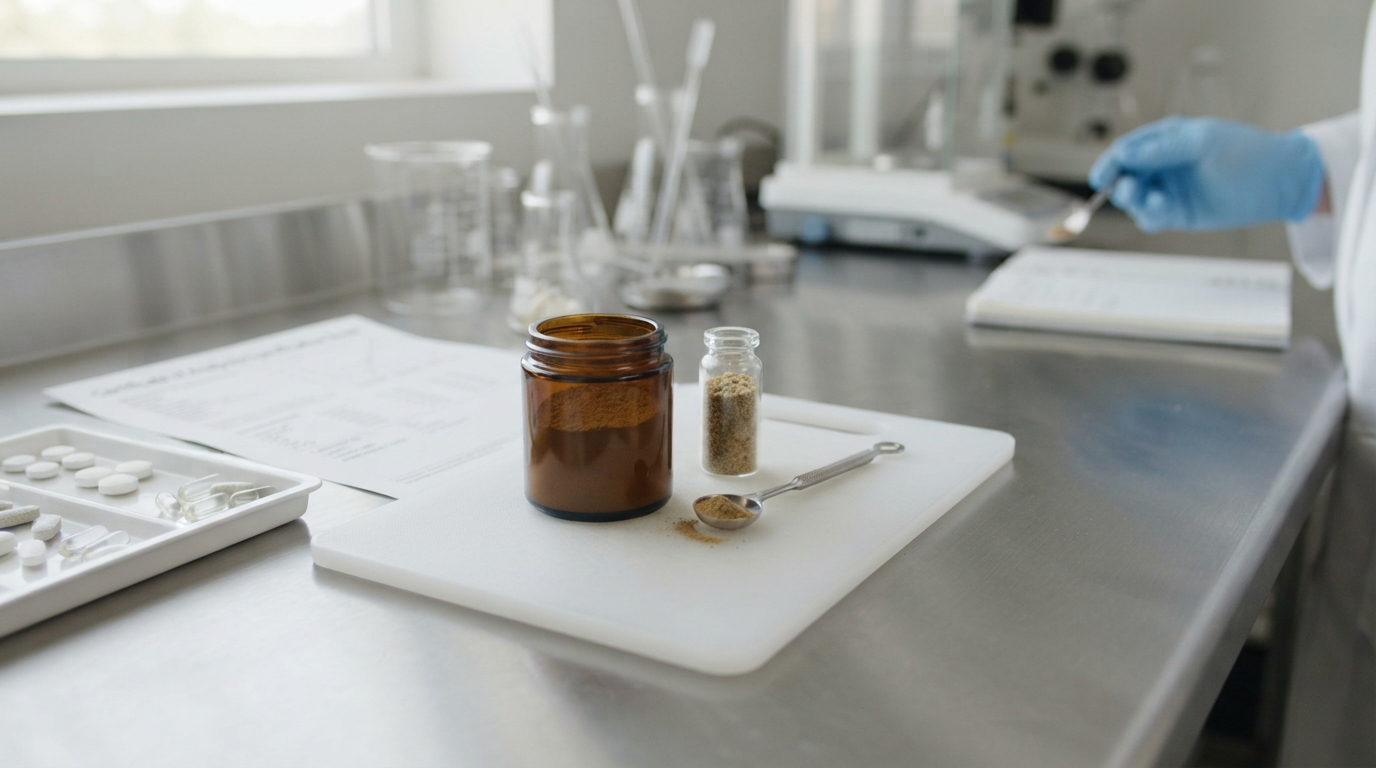
Women’s health supplement ingredients are the nutrients, botanicals, and specialized compounds selected for a defined women’s health formulation objective—and qualified by identity, active-marker specification, dosage form, safety evidence, and batch documentation. For a formulator, brand owner, or procurement professional, the term is not a single ingredient list. It is a sourcing decision.
This guide is written for supplement product developers, not consumers. It explains how to move from a formulation objective to an ingredient category, then to a technical specification, the right documentation, and a qualified supplier.
What Are Women’s Health Supplement Ingredients?
Women’s health supplement ingredients are the raw materials used in products designed for life-stage and wellness needs such as prenatal support, menstrual health, menopause, bone health, urinary tract health, energy, and healthy aging.
A formulator needs more than a list of popular ingredient names. Each ingredient must be assessed for:
- Identity — the correct source material, plant part, or compound.
- Active or marker compound — the measurable component used to confirm identity, consistency, or potency.
- Specification — the relevant unit of measurement, such as potency percentage, extract ratio, purity percentage, or concentration.
- Documentation — batch-specific evidence such as a Certificate of Analysis (CoA) and product-level guidance such as a Technical Data Sheet (TDS).
- Application fit — whether the ingredient performs well in capsules, tablets, powders, gummies, or beverages.
Botanical extracts are one important piece of that broader ingredient picture, and they are usually sourced from a botanical extract supplier for dietary supplements. The same sourcing principles apply to vitamins, minerals, amino acids, and specialized compounds.
How to Select Women’s Health Supplement Ingredients by Formulation Objective
The first step is not “which ingredient is best.” It is “what is the product supposed to do, and for whom?”
That distinction matters because the same ingredient can be appropriate in one women’s health product and inappropriate in another. Pregnancy, menopause, bone health, and urinary tract health create different formulation constraints.
| Formulation Objective | Typical Ingredient Categories | Critical Considerations |
|---|---|---|
| General wellness | Vitamins, minerals, botanical extracts, mushroom extracts | Balanced formula; choose ingredient forms with acceptable stability and bioavailability. |
| Prenatal and fertility support | Folate/5-MTHF, iron, vitamin D, chasteberry | Pregnancy-specific safety review is essential; do not assume that any botanical is safe in prenatal products. |
| Menstrual health | Magnesium, B vitamins, chasteberry, cramp bark | Evidence varies by botanical; consider hormonal or medication interactions. |
| Menopause and healthy aging | Calcium, vitamin D, soy isoflavones, red clover | Standardized extracts are often preferred; check clinically studied marker levels. |
| Bone health | Calcium, vitamin D, magnesium, vitamin K2 | Ingredient form, particle size, and solubility affect mineral bioavailability and tablet size. |
| Beauty and skin | Collagen peptides, hyaluronic acid, vitamin C, botanical extracts | Taste, solubility, and thermal stability are important in powders and gummies. |
| Energy and active women | B vitamins, iron, ashwagandha, cordyceps | Avoid stimulant-style claims; document batch consistency for active markers. |
| Urinary tract health | Cranberry extract, D-mannose | Confirm the active or marker compound and the dosage form’s stability. |
Research on active women across the lifespan shows that nutritional needs vary by age, life stage, and activity level. A sourcing framework should therefore begin with the target consumer and the product’s intended use.
Key Ingredient Categories for Women’s Health Formulations
The following categories cover most women’s health supplement formats. These are general industry categories, not a list of specific products.
| Category | Examples | What to Verify | Typical Dosage Forms |
|---|---|---|---|
| Vitamins and minerals | Folate/5-MTHF, iron, calcium, vitamin D, magnesium, B vitamins | Compound form, assay, stability, mineral oxide vs. chelate differences | Capsules, tablets, powders |
| Botanical and herbal extracts | Chasteberry, cranberry, maca, ashwagandha, red clover | Source plant, plant part, extraction method, marker compound, standardization or ratio | Capsules, tablets, powders |
| Amino acids and specialized compounds | Inositol, D-mannose, DIM, collagen peptides | Purity, dose form, solubility, interaction with other ingredients | Capsules, powders, beverages |
| Mushroom extracts | Reishi, cordyceps, tremella | Extract ratio or marker assay, extraction method, solubility | Capsules, powders |
| Enzymes and probiotics | Digestive enzymes, Lactobacillus strains | Activity units, viability, stability in the finished format | Capsules, powders, gummies |
The most important sourcing distinction appears in botanical extracts. That is where formulators most often confuse standardization, extract ratio, potency, and purity.
Botanical Extract Specifications: Standardized vs. Ratio Extracts
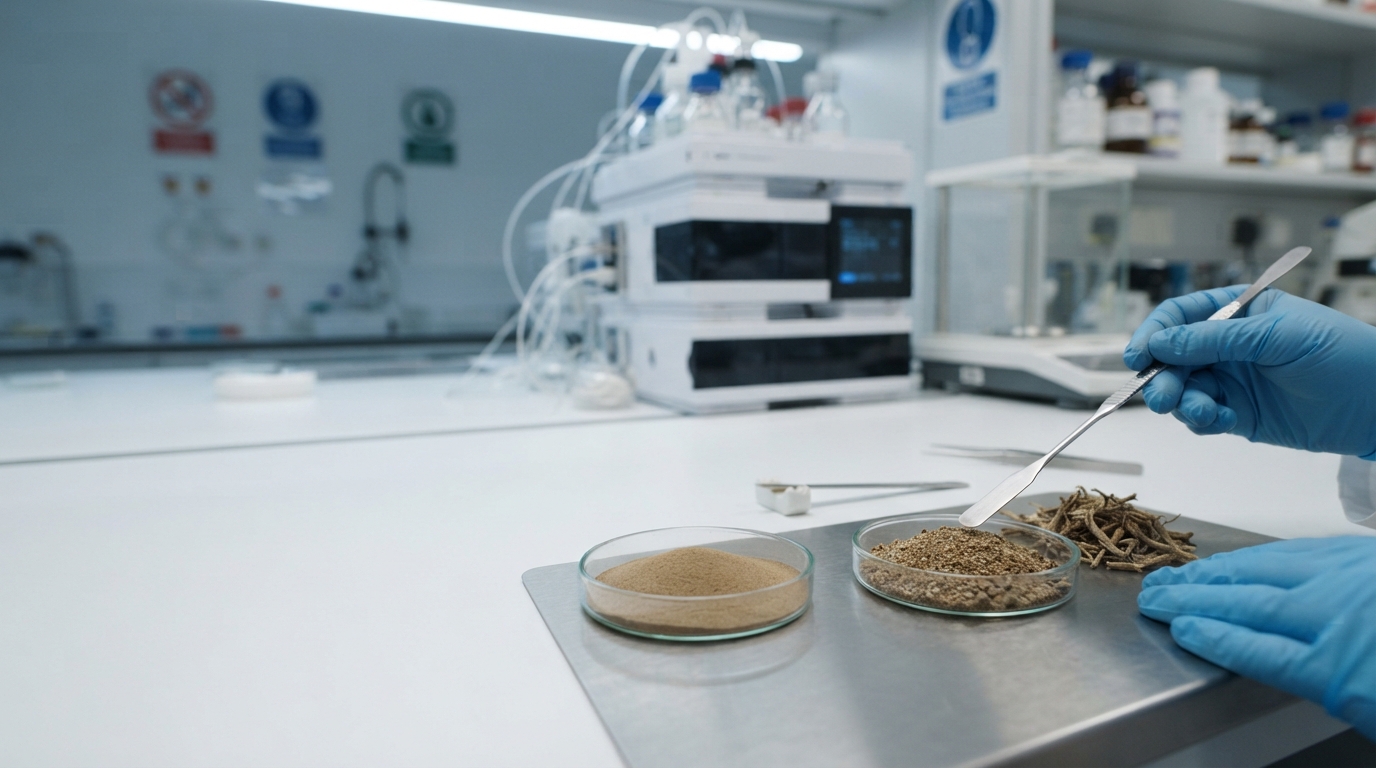
Botanical extracts are not all specified the same way. Three common forms are standardized extracts, ratio extracts, and isolated compounds. Each answers a different sourcing question.
| Form | What It Means | What It Tells You | What It Does Not Tell You |
|---|---|---|---|
| Standardized extract | A guaranteed amount of a marker compound per unit, usually expressed as a percentage | Consistency of a selected marker across batches | Whether that marker is the only active compound or whether other plant constituents matter clinically |
| Ratio extract | The ratio of starting raw material to finished extract, such as 10:1 | How concentrated the extract is relative to the starting plant material | The actual amount of any specific active or marker compound |
| Isolated compound / monomer | A single compound separated from the plant or synthesized, usually expressed as purity percentage | The identity and purity of one specific compound | Whether the full botanical context is needed for the intended effect |
Standardized Extracts
A standardized extract is measured against a defined marker compound. The marker may be an active constituent or simply a consistent chemical marker used for quality control.
For example, a manufacturer might state that an extract is “standardized to contain a minimum percentage of a marker compound.” The exact figure should be confirmed in the product specification and the batch-specific CoA.
Standardization is valuable because it creates batch-to-batch consistency. But it does not mean that higher percentage is always better. The clinically studied level matters more than a large number on a datasheet.
Ratio Extracts
A ratio extract describes the relationship between the raw material and the finished extract. A 10:1 extract means that ten parts of starting material were processed to produce one part of extract.
That ratio is useful for understanding concentration, but it does not prove the concentration of a specific active compound. Two 10:1 extracts from different suppliers can have different marker levels, different extraction methods, and different physical properties.
When a specification sheet lists only an extract ratio, ask what marker compound is present, what assay method was used, and whether the level is consistent from batch to batch.
Isolated Compounds and Specification Units
Isolated compounds, sometimes called monomers or single-compound extracts, are different from standardized extracts. They contain one specific compound at a defined purity.
This creates a common unit problem:
- Potency percentage refers to the amount of a marker compound in a standardized extract.
- Purity percentage refers to the amount of a single compound in an isolated material.
- Extract ratio refers to the raw-material-to-extract relationship.
- Concentration in mg refers to the amount of a compound in a dose or unit.
These units cannot be used interchangeably. A 10:1 extract is not “10% active.” A 98% pure isolated compound is not the same as a standardized extract with 98% potency unless the compound and the assay method are identical.
Required Documentation: CoA, TDS, and Testing
Documentation is the most practical part of ingredient sourcing. Two documents are often confused: the Certificate of Analysis and the Technical Data Sheet.
| Document | Scope | Typical Content |
|---|---|---|
| CoA | Batch-specific | Batch number, manufacturing date, expiry date, identity test, assay/potency result, purity or impurity profile, heavy metals, microbiological results, test methods, results vs. limits |
| TDS | Product-level | General description, appearance, particle size, solubility, moisture content, packaging, storage conditions, shelf life, and handling recommendations |
A CoA verifies what one batch actually met. A TDS describes the product line’s intended specifications and handling.
Both documents are useful, but they serve different purposes. A CoA answers the question “What did this batch test at?” A TDS answers the question “How should this product be specified, handled, and stored?”
Other testing expectations to include in your supplier request:
- Identity testing to confirm the ingredient is the stated material.
- Assay testing to measure the active or marker compound.
- Heavy metals, microbiological testing, pesticide residues, and when relevant, aflatoxins or solvent residues.
- Clarify whether HPLC, UV, GC, or another method was used. Method suitability depends on the compound being measured.
Authentication of starting plant material is an essential quality step in botanical supplement production. If a supplier cannot show where the material came from and how it was identified, the rest of the documentation is less reliable.
Formulation Fit: Matching Ingredient Properties to Dosage Forms
An ingredient can pass its CoA and still fail in the finished product. Physical properties matter as much as potency.
| Dosage Form | Ingredient Properties to Check | Common Formulation Concerns |
|---|---|---|
| Capsules and tablets | Particle size, flow, bulk density, moisture | Poor flow can affect fill weight; high-dose minerals can require large capsule sizes. |
| Powders and sachets | Solubility, taste, moisture, flow | Poor solubility and off-taste are common consumer complaints. |
| Gummies | Heat stability, pH, texture compatibility | Minerals can interfere with gelling systems; botanical extracts can affect color and taste. |
| Beverages | Solubility, clarity, color, pH stability | Some extracts and minerals precipitate or change color at beverage pH. |
Shelf life, packaging, and storage conditions should be evaluated at the ingredient level before the finished product is developed. A powder that is stable in a sealed drum may behave differently in a single-serve sachet.
The application requirements determine the form, potency, purity, and documentation you need. That is why specification cannot be separated from dosage form.
How to Evaluate a Women’s Health Supplement Ingredient Supplier

Supplier evaluation should follow a repeatable process. This is the stage where most sourcing mistakes are caught.
- Define the formulation objective and draft an ingredient specification. Include the ingredient form, marker compound or purity requirement, target dosage form, and any market-specific regulatory constraints.
- Request documentation. Ask for the product-specific TDS, the batch-specific CoA, a product questionnaire, and, if available, a manufacturing flowchart.
- Evaluate testing methods and limits. Confirm which assay method was used and whether identity, purity, contaminant, and stability data are included.
- Verify certification claims with product-specific evidence. A GMP, ISO, or organic certificate should list the scope, site, product category, and issuing body. A generic certification statement without scope is not enough.
- Request a sample or pilot batch. Evaluate appearance, taste, solubility, flow, and behavior in the intended dosage form.
- Review commercial terms. Check MOQ, lead time, packaging, storage, and stability data before committing.
- Ask for historical batch evidence. Several CoAs from different batches show whether the supplier can hold a specification over time.
- Confirm regulatory relevance for your target market. An ingredient that is permitted in one region may require novel-food approval or additional documentation in another.
Red flags to watch for:
- Certification claims without a defined scope or certificate number.
- A CoA that is missing a batch number, test method, or result.
- Specifications that change between the product page, TDS, and CoA.
- Units that are unclear or interchangeable.
- No response when you ask about contaminant testing.
- A supplier that provides marketing sheets instead of technical documents.
Safety, Regulatory, and Claim Boundaries
Women’s health ingredients require extra care because the category includes pregnancy, lactation, and life-stage-specific products.
- Pregnancy and lactation: Some botanical ingredients are not appropriate during pregnancy. Product-specific safety review should be conducted by a qualified professional.
- Drug–supplement interactions: Ingredients such as chasteberry, St. John’s wort, and high-dose minerals can interact with medications.
- Regional regulatory variation: The rules for permitted ingredients, novel foods, and permitted claims differ between the U.S., EU, and other markets.
In the U.S., the FDA does not require dietary supplements to be tested for effectiveness before they are marketed, and the safety evidence for botanical ingredients varies by product and preparation. The FDA supports collaborative botanical safety research through the Botanical Safety Consortium. In the EU, the European Food Safety Authority provides a framework for the safety assessment of botanicals and botanical preparations used in food supplements.
The same discipline applies to product claims. Ingredients cannot be promoted to treat, cure, or prevent disease. A sourcing document may support ingredient identity and quality, but it does not replace market-specific regulatory review.
Common Sourcing Mistakes to Avoid
- Confusing extract ratio with potency percentage. A 10:1 extract is not automatically 10% active.
- Treating a CoA as a TDS, or expecting one document to cover both roles.
- Assuming that a higher percentage is always better.
- Choosing an ingredient without checking solubility, moisture, particle size, and flow for the intended dosage form.
- Not requesting batch-specific documentation.
- Overlooking stability, packaging, and storage conditions.
- Relying on GMP, ISO, or organic claims without product-specific evidence.
- Using disease-treatment language in a supplement claim.
Each of these mistakes is avoidable when the sourcing process starts with a clear specification and ends with verified documentation.
Why Engage a Botanical Extract Supplier for Women’s Health Ingredient Sourcing
Women’s health supplement ingredient sourcing is a technical process. A qualified botanical extract supplier can help you evaluate extracts against your formulation objective and provide the documentation you need.
B-Thriving is a plant-extract and natural-ingredient supplier serving nutraceutical and supplement applications. Its homepage highlights tailored ingredient solutions. If you are at the stage of qualifying an ingredient or supplier, start by discussing your specification, documentation, and sample needs with B-Thriving.
Explore B-Thriving plant-extract ingredient solutions and connect your women’s health formulation to a supplier that can support the next step.

